

What Every Photographer Should Know About Visual SEO for photographers
Table of Contents
What Every Photographer Should Know About Visual SEO

For years, photographers believed that strong images alone would bring clients.
Create beautiful work. Build a portfolio. Let the images speak for themselves.
But today’s search environment doesn’t work that way.
Search engines — and increasingly AI-driven discovery platforms — cannot “see” photographs the way humans do. Without context, structure, and optimisation, even exceptional photography can remain invisible online.
That’s where visual SEO for photographers becomes essential.
This isn’t about gaming algorithms. It’s about helping search systems understand your work so the right audience can actually find it. This article dives into how creatives can future-proof their online presence.
Images Don’t Rank — Context Does
Search engines don’t evaluate an image based on artistic merit. They rely on surrounding information to interpret what the image represents.
If your website simply uploads a file named:
IMG_4587.jpg
Google has no idea whether that image shows:
-
a commercial shoot
-
an architectural project
-
a portrait session
-
or fine art photography
Photographers must now think beyond presentation and focus on how photographers can optimise images for SEO through clarity and structure.
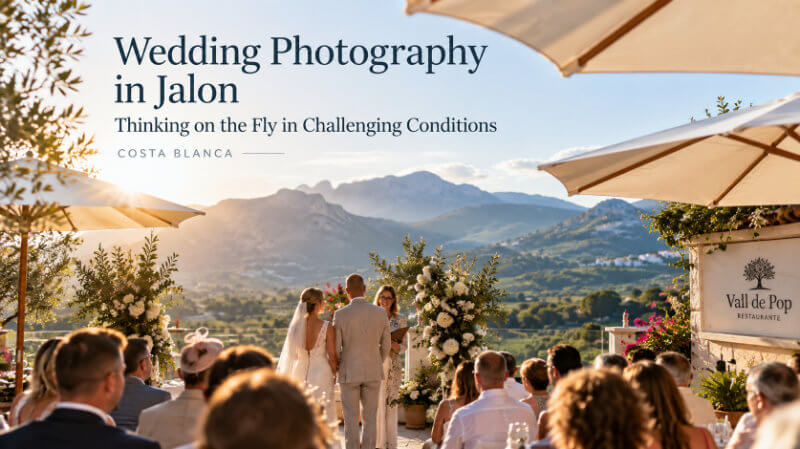
You are not just showing images. You are describing expertise. Here is a portfolio page of mine which ranks really highly on most Costa Blanca Spain photographer searches.
File Names Are Your First Signal
Before an image is even uploaded, its file name sends a strong relevance signal.
Compare:
❌ DSC00921.jpg
✅ editorial-portrait-photography-natural-light.jpg
Search engines read file names as descriptive metadata. Clear naming helps align your work with the type of photography clients are actively searching for.
This is one of the simplest yet most overlooked image SEO best practices for photographers.
Alt Text Is Not Optional — It’s Foundational
Alt text was originally designed for accessibility, but it now plays a major role in search interpretation.
Strong alt text:
-
Describes what is actually in the photograph
-
Adds context about the type of work
-
Reinforces your niche without keyword stuffing
Example:
❌ “photo”
✅ “Environmental business portrait photographed on location using natural window light”
This helps both accessibility tools and search engines understand your specialism.
Your Portfolio Needs Supporting Language
A common mistake photographers make is presenting galleries with no written explanation.
Visually appealing? Yes.
Search-visible? No.
To improve photography website SEO tips, each portfolio section should include:
-
A short introduction explaining the project type
-
The intent behind the shoot
-
The context (commercial, editorial, personal, etc.)
This transforms a gallery into an interpretable resource — something search engines can classify and recommend.
Page Structure Matters as Much as the Images
Search engines evaluate hierarchy before they evaluate media.
Each photography page should include:
-
A clear H1 describing the type of photography
-
Supporting text that explains your approach
-
Logical page titles (not just “Gallery”)
-
Internal links that connect related expertise
When photographers optimise photos for search engines, they must also optimise the environment those photos live in.
Think of it as building a frame around the work — not just displaying it.
AI Search Is Changing Discovery
AI-driven search tools now summarise, interpret, and recommend creative services differently from traditional search engines.
Instead of matching keywords alone, AI evaluates:
-
Topical authority
-
Consistency of language
-
Clear explanations of expertise
-
Supporting educational content
This means photographers who write about their process, approach, and thinking gain visibility over those who only upload images.
Visual SEO is no longer technical. It’s interpretive. Here is an example of a well optimised image I uploaded to Google Maps, it has already got more than 20 000 views and is now the featured imager when you search for Stratford bus station.
Captions Are Quietly Powerful
Image captions are crawlable text. They reinforce meaning without disrupting design.
A simple caption like:
Editorial portrait photographed using available light to maintain authenticity.
Adds semantic clarity that strengthens your relevance signals.
Multiply this across your site, and search engines begin to understand not just individual images — but your overall expertise.
Visual SEO Attracts Better Clients — Not Just More Traffic
The goal isn’t higher traffic numbers.
It’s alignment.
When your work is clearly described and structured, you attract visitors who already understand what you do and why you do it. That leads to:
-
More qualified enquiries
-
Better project fit
-
Less price-driven negotiation
-
Stronger professional positioning
Good SEO doesn’t dilute creativity. It protects it.
Visual SEO for photographers -The Shift Photographers Must Embrace
Photography websites can no longer rely on aesthetics alone. They must communicate meaning.
Visual SEO is simply the practice of translating visual expertise into language that search systems can interpret.
Once that translation exists, your work becomes discoverable — not just visible.
Frequently Asked Questions
Does SEO ruin the visual feel of a photography website?
No. When done correctly, SEO operates in the background through structure, file naming, and supporting text without affecting design.
How many words should a portfolio page include?
Even 150–200 words of context can dramatically improve search understanding while keeping the visual focus intact.
Do photographers really need to think about SEO now?
Yes. AI-driven discovery tools rely heavily on contextual signals. Without them, even outstanding work can remain hidden.
Is image optimisation technical?
Not necessarily. Most improvements involve clarity, naming, and explanation rather than complex coding.
Visual SEO for photographers -Closing Thought
Search engines cannot experience photography emotionally.
But they can understand it — if you give them the language to do so.
Visual SEO isn’t about optimising images.
It’s about ensuring your expertise is recognised, interpreted, and discoverable in a changing digital landscape.