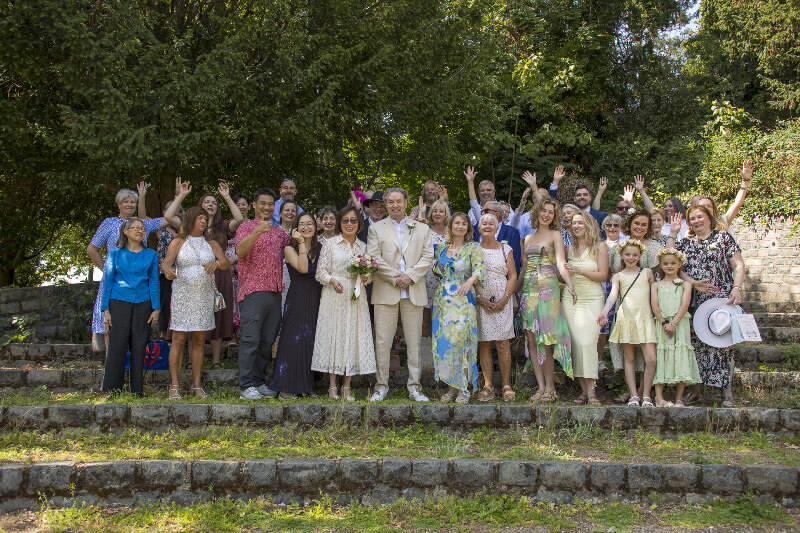


Wedding Photography Jalon: Thinking on the Fly in Difficult Conditions

Wedding Photography Jalon. Wedding photographers often show portfolios filled with beautiful venues, perfect light, carefully composed portraits and wide-open spaces where everything seems to fall into place. Real weddings aren’t always like that.
Last Saturday, I photographed a wedding at Restaurante Vall de Pop in Llíber, in the Vall de Pop area of the Costa Blanca. The location itself is spectacular, with panoramic views across the valley, and the wedding was a fantastic occasion. The staff were excellent, the food was great, the music was fantastic and, most importantly, the bride, groom and their guests had a wonderful time.
From a photography point of view, however, it was one of those assignments where I arrived, looked at the setup and thought: this is going to be difficult.
That is where experience becomes important. Wedding photography isn’t simply about having the right camera and lenses. Sometimes it is about arriving at a location, discovering that almost none of your usual positions are available and then working out how you are going to create good photographs anyway.
Table of Contents
A Beautiful Location Doesn’t Necessarily Mean an Easy Location for Photography
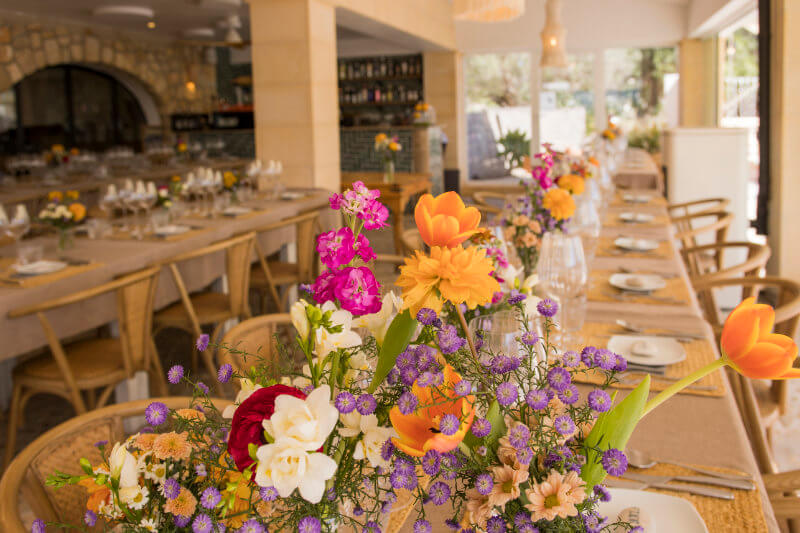
Restaurante Vall de Pop is set in a spectacular part of the Costa Blanca, overlooking the Vall de Pop. The scenery is one of the great attractions of the location, with the surrounding mountains and valley providing a beautiful Mediterranean backdrop.
But there is a difference between a location being visually beautiful and a location being easy to photograph a wedding in. A venue can be absolutely perfect for the couple and their guests while presenting a completely different set of challenges for the photographer.
When I arrived, the first thing I noticed was the position of the ceremony. The wedding was due to start at 4:30pm, and the bride and groom were positioned directly in front of the sun. This immediately created a difficult situation. The couple were backlit, while the guests were facing towards the sun and, understandably, were having to squint to see the ceremony.
From my perspective, this meant dealing with strong backlighting, difficult exposure and limited opportunities to find a flattering angle. However, that wasn’t actually the biggest problem I was going to face.
There Was Nowhere to Stand
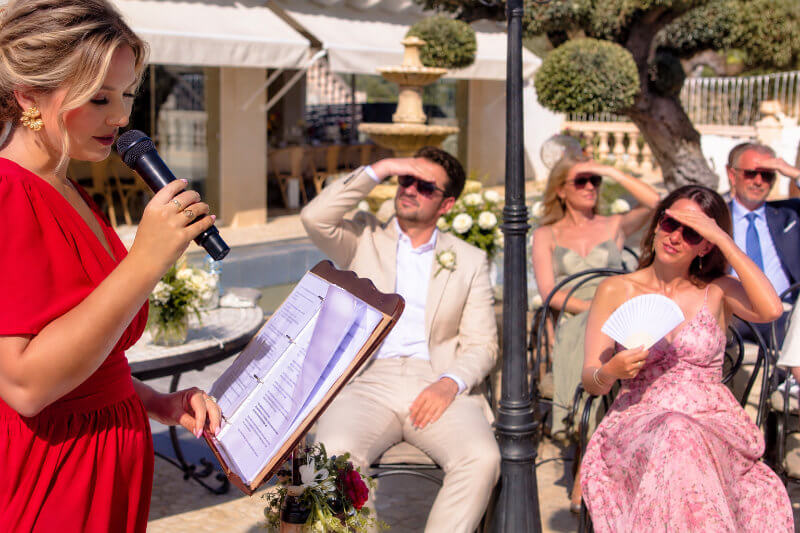
The next problem became apparent when I looked at the number of guests and the way the seating had been arranged. There were simply more people than the available space could comfortably accommodate from a photography perspective.
Normally, during a wedding ceremony, I like to have several options. I might photograph from the rear, giving me a clear view down the aisle towards the couple. I can move to the side for a different perspective, or work from near the front to capture expressions and reactions. Depending on the venue, I may move around during different parts of the ceremony to find different compositions and moments.
Here, almost all of those options disappeared. There wasn’t really an aisle that I could use, there wasn’t enough space at the back for the usual wide-angle view and there wasn’t enough room at the front either.
Then there were the large umbrellas positioned around the seating area. From the guests’ perspective, they provided welcome shade. From my perspective, they created another series of obstructions. Every time I looked for a potential composition, something seemed to be in the way.
Quite literally, I found myself asking: where am I supposed to stand?
This Is Where You Have to Start Thinking Differently
This is one of the reasons I believe wedding photography experience is about much more than knowing how to operate a camera. When the environment is perfect, photography can sometimes be relatively straightforward. When you have beautiful light, plenty of space, an unobstructed view and a venue designed with photography in mind, you can concentrate almost entirely on the photographs.
When those things aren’t available, you have to start solving problems. You have to stop thinking about where you normally take photographs and start thinking about where you can take photographs.
That sounds like a small distinction, but it makes a huge difference. Instead of waiting for the perfect angle, you start looking for the best angle available. Instead of trying to recreate the photographs you normally take, you start looking for photographs that work within the environment you are actually in.
The Wedding Itself Was Fantastic

It is important to make this distinction because the difficulties I experienced as the photographer didn’t reflect the wedding itself. Quite the opposite. The wedding was a great occasion.
The setting was beautiful, with the Vall de Pop landscape providing an impressive backdrop, and the atmosphere throughout the day was fantastic. The staff did a great job, the food was excellent and the music created exactly the right atmosphere. The bride, groom and their guests were enjoying themselves and the whole event had a wonderful atmosphere.
The difficulties were almost entirely photography problems.
And that’s an important distinction. A venue doesn’t have to be designed around the needs of a photographer to be a wonderful wedding venue. What works for a couple and their guests isn’t necessarily the same thing as what makes life easy for the person carrying a camera.
Finding the Photographs Within the Restrictions
Once you realise that you can’t change the environment, you have to work with it. That means constantly looking for opportunities.
During the ceremony, I was watching for moments when the bride and groom moved, when guests reacted, when expressions changed and when the light worked in my favour. Rather than relying on one perfect viewpoint, I had to make use of whatever angles became available.
This is where knowing your equipment also becomes important. You need to understand what you can achieve with different focal lengths, how much you can isolate a subject, how to deal with difficult exposure and how to make a composition work even when the background isn’t ideal.
You also need to be prepared to move quickly when an opportunity appears. A wedding doesn’t stop because the photographer is struggling. The couple aren’t going to repeat the ceremony because you couldn’t find the right position. The moment happens once, and you have to be ready.
Thinking on the Fly Is Part of Being a Wedding Photographer

One of the things I enjoy about wedding photography is that no two assignments are exactly the same. You can plan, visit the venue, check the light and think about your compositions, but once the guests arrive and the wedding begins, everything changes.
People move. Weather changes. Light changes. Timings change. A venue can look completely different once it is occupied by dozens of guests.
Sometimes you simply discover that the position you thought would work doesn’t work at all. That is when experience matters. You need to be able to abandon Plan A without allowing the problem to affect the rest of the assignment.
The Photographer’s Job Isn’t to Create Perfect Conditions
I think there is sometimes an unrealistic expectation that professional photography is about creating perfect photographs simply by having expensive equipment. It isn’t.
Good equipment certainly helps, but it doesn’t solve a badly positioned ceremony, an obstructed viewpoint or a lack of space. The photographer still has to solve the problem.
Sometimes the solution isn’t to produce the photograph you originally imagined. It is to produce the best photograph that the circumstances will allow.
That is an important difference. Professional photography isn’t about waiting for ideal conditions. It is about knowing how to work when ideal conditions don’t exist.
Beautiful Wedding Photography Can Come from Imperfect Situations
Looking back at the assignment, I think it was actually a useful reminder of why experience matters. The venue was beautiful, the wedding was beautiful and the valley provided an incredible backdrop. But the photography conditions were far from ideal.
There was no traditional aisle, space was limited, large umbrellas obstructed some of the views and the ceremony was taking place against strong sunlight. There were also more guests than the available space really allowed for easy movement with a camera.
None of that could be changed once the wedding had started. So the only option was to adapt.
That is what professional wedding photography often involves. Not waiting for the perfect photograph to present itself, but recognising the opportunities that exist and making the most of them.
A Wedding Photographer Needs to Be a Problem Solver
This is probably the biggest lesson I took away from the day. Technical photography skills are important. Knowing exposure, lenses, composition and light is important. But there is another skill that doesn’t appear on a camera specification sheet: problem solving.
Sometimes the most difficult wedding isn’t the one with terrible weather or a challenging couple. Sometimes it’s the beautiful wedding at the beautiful location where, five minutes before the ceremony begins, you realise that you have almost nowhere to stand.
That’s when you earn your money.
You assess the situation, adapt your approach and keep photographing. Because ultimately, the couple don’t need to know how difficult the photographer’s job was. They need photographs that allow them to remember how wonderful their wedding was.
And that is the job.
Wedding Photography on the Costa Blanca

Every wedding presents its own challenges, whether it takes place in a purpose-built wedding venue, a hotel, a private villa or a restaurant overlooking the Mediterranean. For a wedding photographer on the Costa Blanca, the ability to adapt to the location, light, weather and people is just as important as the technical side of photography.
The Costa Blanca offers some spectacular settings for weddings, but the reality of photographing them is always different. Sometimes everything falls perfectly into place. Sometimes you have to think on your feet.
For me, that is part of what makes wedding photography interesting. You never quite know what the day is going to throw at you.