

Behind the Scenes-A Day in the Life of a Costa Blanca Photographer

Table of Contents
When Photographing a Luxury Yacht Doesn’t Quite Go According to Plan
Being a professional photographer on the Costa Blanca can involve some pretty spectacular assignments. Sunrise shoots, luxury villas, events, weddings and yachts sailing along the Mediterranean coastline can make it look like a dream job from the outside, and sometimes it genuinely is. There is, however, another side to professional photography that clients don’t always see. Weather changes, schedules move, equipment doesn’t always cooperate, locations become unavailable and sometimes, despite weeks or months of planning, the conditions simply aren’t right for the photographs you need.
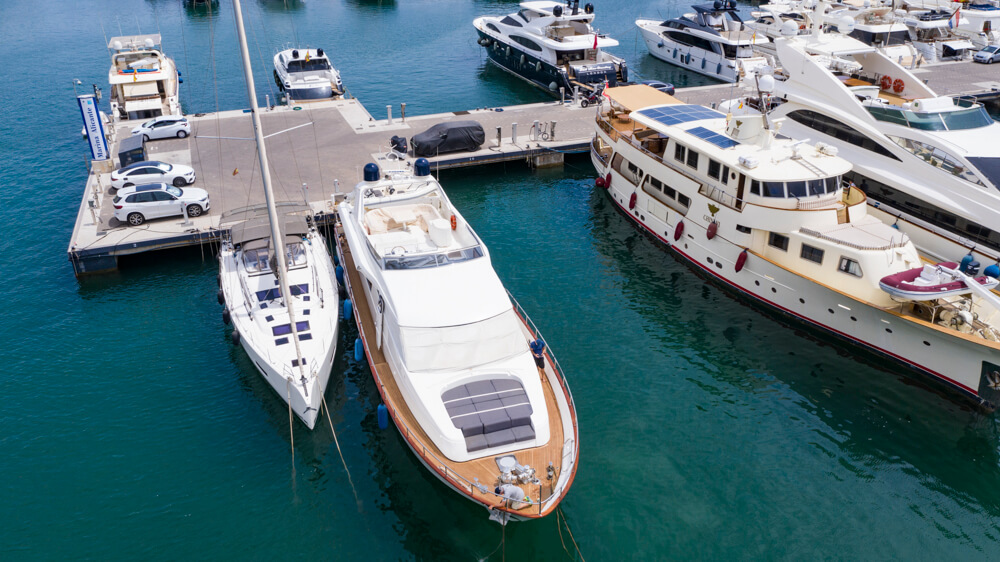
I was reminded of that recently when I was asked to photograph a large luxury yacht for a Belgian yacht broker. It was supposed to be a fairly straightforward assignment, but it turned into a rather different day and provided a useful reminder that professional photography is often as much about adapting to circumstances as it is about taking photographs. I will take you behind the scenes-a day in the life of a Costa Blanca Photographer.
The Original Yacht Photography Plan
The yacht was being prepared for sale, and the broker was confident that high-quality professional photography would help present it to potential buyers. The plan was carefully organised. I would wait on the harbour wall while the yacht manoeuvred around the harbour, allowing me to photograph the vessel from multiple angles, including the front, rear and both sides.
Once I had captured the exterior, I would board the yacht and photograph the interior and exterior while it sailed out into the bay. Once the yacht was anchored, I would launch the drone and capture aerial photographs showing the vessel in the Mediterranean. On paper, it was an excellent plan, and the resulting photographs would provide the broker with a complete set of marketing images showing both the yacht itself and the lifestyle surrounding it.
Then, just before the scheduled shoot, everything changed.
The Shoot Was Postponed
The yacht’s owner wasn’t happy with the condition of the boat. Rather than put it on the market immediately, the decision was made to have it completely refitted and brought back to an as-new condition. The photography was therefore postponed.
I’ve had assignments like this before. You spend time planning the shoot, arrange your schedule, prepare your equipment and mentally start working through the assignment, only for the phone to ring and the job to be postponed. Sometimes it gets cancelled altogether. By the middle of July, I had effectively forgotten about the yacht and assumed the project had disappeared.
Then, two weeks ago, I received a message from the broker.
“Can You Get to Alicante in Two Days?”

The yacht had been refitted and was about to be launched. Could I get to Alicante in two days?
Fortunately, I happened to have the day available, so at 7:30 in the morning I arrived in Alicante and headed towards the shipyard. My first deadline was 8:30. The yacht was due to be put into the water, and I needed to photograph the hull and the newly refurbished propellers before that happened.
The Refurbished Yacht
When I saw the underside of the yacht, I immediately understood why the owner had decided to have the work carried out. The hull and propellers had been completely refurbished and looked fantastic. This was an opportunity I couldn’t repeat once the yacht was floating, so I concentrated on documenting the work while I had access.
I photographed the hull, the propellers and the details of the areas that would soon disappear beneath the Mediterranean. Then came another delay. The launch was postponed, which meant I suddenly had some time to spare.
So, naturally, I did what any professional photographer in Alicante should do when given an unexpected break in the schedule: I found a coffee.

The Weather Was Perfect
When I returned, the yacht was on the quayside and preparations were continuing. I photographed it as it was being manoeuvred into position, and at that point the conditions were almost perfect. There were blue skies, not a breath of wind and beautiful Mediterranean light. Everything appeared to be falling into place.
Then the delays continued.
Eventually, the yacht was returned to the water and I boarded at around 1pm.

And Then I Saw the Dust
This is where experience becomes rather important. I walked around the yacht and quickly realised that I couldn’t simply start photographing the interior. The vessel had just come out of dry dock and there was dust everywhere. Protective coverings were still in place and even the main navigation windscreen was covered.
When I looked at the windows inside, I could see dust and dirt that would have been painfully obvious in photographs. There was no point pretending otherwise. A luxury yacht advertised for sale needs to look luxurious, not like it has just emerged from a shipyard.
So I decided to compartmentalise the assignment. Rather than worrying about everything at once, I would concentrate on what could be achieved. First, we would leave the harbour, then I would photograph the yacht underway and afterwards we would attempt the drone photographs. Once those elements were completed, we could assess what remained.
Finally, We Set Sail
We eventually left the harbour at around 2pm and almost immediately the perfect morning disappeared. The wind had picked up considerably and the blue sky was becoming increasingly cloudy. This wasn’t necessarily a disaster, as a yacht can look fantastic in strong conditions, but it wasn’t the Mediterranean image the broker had originally envisaged.
The plan had been to anchor in the bay and capture beautiful aerial photographs of the yacht surrounded by calm blue water. Unfortunately, it was the middle of summer and the bay was full of small boats and jet skis. The owner understandably wasn’t comfortable dropping anchor in such busy conditions, so instead we decided to head back towards the harbour.

Then the Drone Refused to Fly
This was perhaps the most frustrating part of the day. I prepared the drone and started it up, but it refused to calibrate its GPS properly. There was simply too much movement.
Normally, this would be extremely frustrating. On this occasion, however, I was actually relieved. The conditions were deteriorating, the wind was strong and the water was choppy, and I was being asked to fly a drone over the Mediterranean. Even if the drone had allowed me to take off, I knew the conditions weren’t going to produce the beautiful, calm aerial photographs we wanted.
There was also a much more important consideration. A drone over open water is an expensive piece of equipment, and if something went wrong there wouldn’t necessarily be a second chance. Losing a drone in the Mediterranean would be a very expensive way of discovering that conditions weren’t suitable.
So I didn’t force it.
Sometimes knowing when not to take a photograph is just as important as knowing how to take one.
Behind the Scenes-A Day in the Life of a Costa Blanca Photographer. Sometimes You Have to Call It a Day
We eventually returned to the port, where we discussed what needed to happen before the yacht could be properly photographed. The owner and skipper explained that cleaning the vessel properly after its time in dry dock was going to take considerably longer than expected, probably the entire day and possibly two days.
There was little point continuing. The yacht wasn’t ready, the light wasn’t ideal, the weather had changed and the drone conditions weren’t safe or suitable. So we called it a day.
I contacted the yacht broker and explained the situation. Naturally, he was disappointed, and so was I. But professional photography isn’t about pretending everything is perfect when it isn’t.
The Shoot Isn’t Over—It’s Just Postponed Again
We’re now waiting for another suitable window to complete the assignment. The yacht has been beautifully refurbished, the broker knows exactly what photographs he needs, and I know the vessel. I’ve already photographed the hull, the refurbished propellers and some of the exterior, so when the next opportunity comes, I’ll be ready.
Hopefully with calm Mediterranean water, clear skies and a clean yacht. Preferably all three at the same time.
What a Yacht Photography Assignment Really Involves
From the outside, photographing a luxury yacht might sound relatively simple. Find a beautiful yacht, find beautiful weather and take beautiful photographs. In reality, professional yacht photography involves considerably more planning.
You have to think about weather and wind conditions, harbour movements, tides and water conditions, the yacht’s schedule, access to the vessel, interior preparation, cleaning and presentation, available natural light, drone safety, maritime traffic, client requirements and the final marketing purpose of the photographs.
And then you have to be prepared for all of those things to change.
Flexibility Is Part of Professional Photography
This assignment was a useful reminder that photography isn’t always about controlling the environment. Sometimes it’s about adapting to it.
The original shoot was postponed because the owner wanted the yacht completely refurbished. The launch was delayed, the yacht wasn’t clean enough to photograph properly, the weather changed, the wind increased, the bay became too busy to anchor and the drone wouldn’t calibrate.
None of those things were within my control.
What I could control was how I responded, and that is perhaps one of the most important skills a professional photographer can develop.
The Photographs Will Be Worth the Wait
When we eventually complete the shoot, the objective remains exactly the same. The yacht needs to look exceptional, the photographs need to show the quality of the refit, the interiors need to look clean, spacious and luxurious, and the exterior photographs need to demonstrate the scale and design of the vessel.
If the weather and conditions cooperate, the aerial photographs will also show the yacht in the Mediterranean environment that makes the Costa Blanca such an attractive destination for yacht owners.
The broker isn’t simply buying photographs. He’s investing in marketing material designed to help sell a very valuable asset. That means getting the photographs right is more important than getting them quickly.
Behind Every Great Photograph Is a Story
This is something I have learned repeatedly during my career. The final photograph rarely tells you how difficult it was to create.
You don’t see the postponed shoot, the early morning start, the shipyard, the coffee break, the dust, the changing weather or the drone refusing to fly. You simply see the finished photograph.
And that’s exactly how it should be.
The job of a professional photographer is to deal with everything that happens behind the scenes so that the client ultimately gets the photographs they need. Sometimes that means working until the perfect photograph is achieved, and sometimes it means recognising that today simply isn’t the right day.
The yacht will still be there. The next weather window will come, and when it does, I’ll be ready.
Frequently Asked Questions
What is involved in professional yacht photography?
Professional yacht photography involves considerably more than photographing the vessel itself. The photographer needs to consider the yacht’s location, weather, water conditions, harbour movements, interior presentation, lighting, client requirements and potentially drone photography.
Why is weather important for yacht photography?
Weather dramatically affects the appearance of the sea, sky and yacht. Strong winds and choppy water can make it difficult to create the calm Mediterranean lifestyle imagery often required for luxury yacht marketing photography.
Can drones be used for yacht photography?
Yes, drone photography can produce spectacular aerial images of yachts, but conditions must be suitable. Wind, GPS reliability, water movement, nearby vessels and local regulations all need to be considered before flying.
Why can’t a yacht simply be photographed immediately after a refit?
A yacht coming out of dry dock can have considerable dust and protective coverings remaining throughout the vessel. For luxury yacht marketing photography, the boat needs to be thoroughly cleaned and prepared so that the photographs reflect its finished condition.
Where do you provide yacht photography?
I provide professional yacht photography in Alicante, the Costa Blanca and throughout Spain, depending on the requirements of the assignment.